Reflection as a Competitive Advantage
In the fast-paced modern economy, most professionals suffer from "Active Inertia"—the habit of working harder and harder in a direction that may no longer be optimal. They treat the end of the year as a formality: a box to be checked, a bonus to be collected, and a quick move to the next task.
This is a missed opportunity for exponential growth.
Elite performers in business, sports, and leadership treat the end of a cycle as a "Strategic Recalibration." They don't just count their wins; they analyze the system that produced them. We can define your professional growth rate using this formula:
CareerGrowthRate=(SelfAwareness+StrategicCorrection)×Consistency
To conduct a master-level review, you need more than a list of achievements. You need a structured audit. Here are the three frameworks to help you evaluate the past and architect your future.
The Analytical Deep Dive: GRAI Review
Before moving forward, you must look back with total objectivity. The GRAI Review Framework is designed to strip away emotional bias and reveal the true drivers of your performance.
The GRAI Breakdown:
- G (Goal): What were your documented objectives in January? Be specific.
- R (Result): What actually happened? Quantify the delta (the gap) between your goal and reality.
- A (Analysis): This is the most critical step. Why did the gap exist?
- Was it Internal? (e.g., You lacked the negotiation skills to close the deal.)
- Was it External? (e.g., A market shift made the product obsolete.)
- I (Insight): What is the "Rule of Thumb" you've learned? If you had to repeat the year, what one thing would you do differently?
Why it works
Most people attribute success to their skill and failure to "bad luck." GRAI forces Analytical Honesty. By identifying whether a failure was a System Problem or a Skill Gap, you know exactly where to invest your learning hours next year.
Learn more about this framework:
 Myframework
Transforming Reflection into Action: KISS Framework
The danger of self-reflection is getting stuck in "Analysis Paralysis." To avoid this, you must transform your GRAI insights into a high-impact roadmap. The KISS Framework (Keep, Improve, Start, Stop) is the industry standard for tactical pivoting.
Implementing KISS for Your Career:
- KEEP (What worked?): List the habits, tools, or relationships that provided the highest ROI this year. Perhaps it was a specific Thinking Framework or a weekly networking ritual.
- IMPROVE (What showed potential?): What yielded results but was inefficient? Maybe you closed deals, but the process took too much time. You need better Communication Frameworks.
- START (What’s missing?): Based on your GRAI Analysis, what new skill or habit is required for your next promotion? This is your "learning curriculum" for Q1.
- STOP (What’s the drain?): This is the hardest yet most important quadrant. What are you doing out of habit that yields zero value? Successful career growth is often about subtraction, not addition.
Learn more about this framework:
 Myframework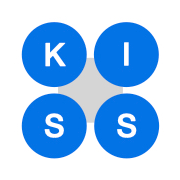
The Visionary Alignment: Past & Future Evaluation
A career review shouldn't just be about "output"; it must be about Directional Alignment. You can be the most productive person in the world, but if your ladder is leaning against the wrong wall, you are only getting to the wrong place faster.
The Macro Perspective
The Past & Future Evaluation forces you to zoom out and see your year as part of a 5-year arc.
- Reviewing the Past: Summarize the year not in numbers, but in Meaning. Which achievements actually made you proud? Which "wins" felt empty?
- Planning the Future: Define the Vision of your Future State.
- Who do you want to be in 12 months?
- What resources (money, mentors, tools) do you need to acquire to bridge the gap?
The Anti-Goal Strategy
To sharpen your future vision, write down your Anti-Goals. If your goal is "Success," your Anti-Goal might be "Working 80 hours a week and missing my family's milestones." This provides a boundary for your ambition.
Learn more about this framework:
 Myframework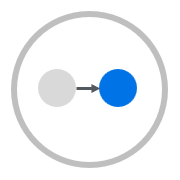
FAQ: Navigating the Performance Review Season
Q: How do I talk about my failures in an official performance review?
A: Use the GRAI logic. Explain the Result, your Analysis of why it happened, and most importantly, the Insight you gained. Managers love a subordinate who turns a mistake into a systematic improvement.
Q: When is the best time to do a self-audit?
A: Ideally, the second to last week of December. Use a quiet environment ("The Off-site Mindset") where you can detach from daily fires.
Q: Should I share my KISS list with my team?
A: Absolutely. Sharing your "Stop" and "Improve" list builds Radical Candor and encourages your team to conduct their own strategic reviews.
Final Thoughts: Reflection is the Engine of Mastery
Elite professionals aren't just more talented; they are better at self-correction. By using the GRAI, KISS, and Past & Future frameworks, you transform your year from a series of random events into a structured laboratory for growth.
Your future is a design project. Don't just let the next year happen to you. Audit your past, engineer your habits, and master your frameworks.
Start your audit today. Explore the full myframework.net library to find the specific tools for your next chapter.