Business & Growth
VRIO Framework: The Litmus Test for Competitive Advantage
Evaluate whether your resources create real, defensible competitive advantage.
Applications
Framework Card
VRIO Framework
- Goal
- Distinguish between temporary strengths and sustainable advantages by auditing internal resources.
- Best For
- Strategic Planning; M&A Due Diligence
Quick Introduction
In today’s competitive business environment, companies constantly seek ways to stand out. But what truly sets a business apart?
Many struggle to identify which resources contribute to long-term success. This is why the VRIO Framework becomes essential.
What this framework is
Developed by Jay Barney in 1991, this framework provides a structured way to assess internal resources (it's also part of the Business Model Canvas, we could see how important it is.) and determine whether they can create a sustained competitive advantage.
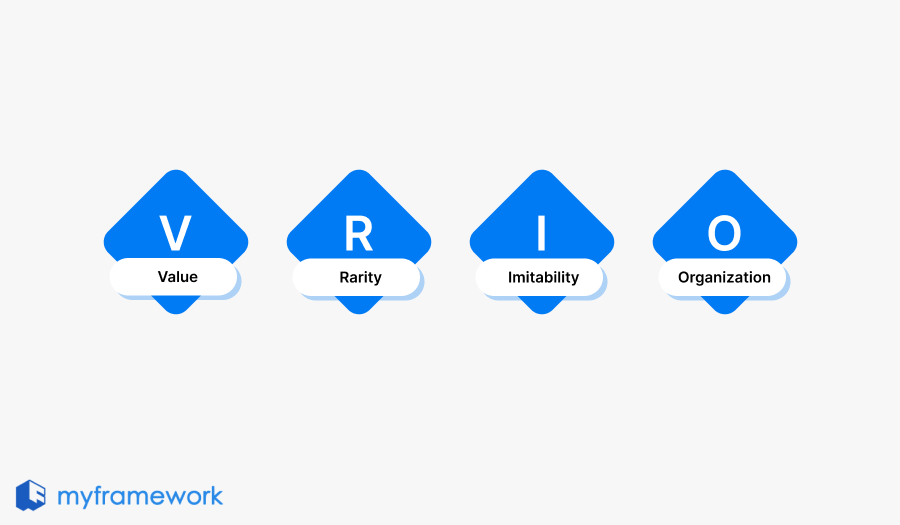
The VRIO Framework evaluates resources based on four key factors:
- Value
- Rarity
- Imitability
- Organization
Advertisement
Core Concept of the VRIO Model
Value
A resource must add value to the company; otherwise, it may not only fail to contribute to a competitive advantage but could even lead to a disadvantage.
Key questions to ask:
- Does this resource help the company respond to customer needs or market demands?
- Does it improve business performance, such as efficiency or profitability?
- Is this resource aligned with our business strategy and objectives?
- How does this resource contribute to solving current business challenges?
Rarity
A resource must be rare to provide an edge. If every competitor has access to it, it won’t create an advantage.
Key questions to ask:
- How many competitors possess this resource or capability?
- Is this resource difficult for others to acquire or replicate?
- How unique is this resource compared to what is available in the market?
- Would this resource provide a distinct advantage if it were not widely available?
Imitability
If a resource is easy to imitate, competitors can quickly catch up. The harder it is to copy, the stronger the advantage.
Key questions to ask:
- Can competitors easily imitate this resource or capability?
- What barriers exist that make it difficult for others to copy this resource (e.g., patents, unique skills, proprietary technology)?
- Are there factors (e.g., time, cost, complexity) that would make it challenging for others to replicate this resource?
- Is this resource tied to the company’s history, culture, or relationships, making it harder to imitate?
Organization
Even a valuable, rare, and hard-to-imitate resource won’t be useful if the company isn’t organized to exploit it fully.
Key questions to ask:
- Does the company have the right structure and systems in place to fully leverage this resource?
- Are there processes or policies that support the effective use of this resource?
- Does the company have the right skills, knowledge, and culture to maximize this resource’s potential?
- Is there a clear alignment between the resource and the organization’s strategic goals?