3A Trust Model: Attitude, Ability, Alignment in a First Meeting
The 3A Trust Model is a first-meeting checklist: Attitude (willingness to work together), Ability (evidence you can help with this problem), and Alignment (a shared goal). It names which signal is missing. It does not put trust on a timer.
Framework Card
- Name:
- 3A Trust Model
- Goal:
- Check Attitude, Ability, and Alignment as first-meeting signals so a new working relationship has something concrete to rely on besides elapsed time.
- Flow:
- Attitude → Ability → Alignment
- Best For:
- First meetings with a new manager, client, or partner; Cross-team work where there is no shared track record yet; Moments when someone must rely on your judgment before results exist
Why it matters
In a first meeting, the other person has almost no track record. They still have to decide whether to share context, introduce you internally, or wait you out.
People often pick one move. They are extra warm (and offer no proof). They recite wins (and never confirm the other person's goal). They claim "we're aligned" when they have not heard the goal yet. The meeting feels busy and still thin.
3A is a way to see those gaps. Time can still matter later. This lens is for the conversation where history is short.
What it is
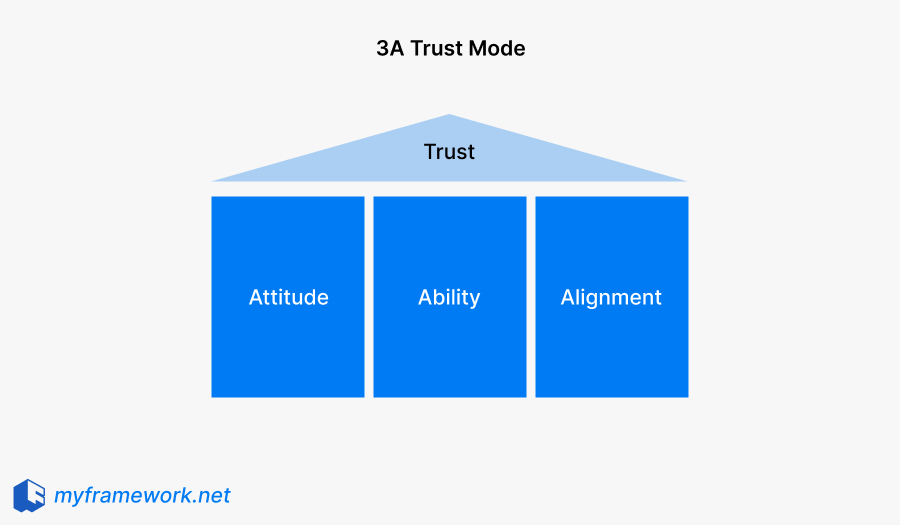
The 3A Trust Model treats early trust as three visible signals.
Attitude is whether you seem willing to cooperate: clear introduction, room for the other person to talk, respect for their role. It is not flattery.
Ability is evidence tied to the current problem: a result, a constraint you have handled, a way of working that matches this job. It is not a full career tour.
Alignment is a stated overlap: their outcome, and how your work supports it. It is not a slogan that "we are on the same team" with no content.
Teaching order is Attitude, then Ability, then Alignment. In a real meeting the three can interleave. The method still asks you to leave none of them blank.
This page's 3A is Attitude, Ability, Alignment as taught in production content. Other trust models use different factor lists. Do not treat 3A as a universal psychology of trust.
How it works
A useful 3A pass names the three signals in the case, not a speech about being trustworthy.
1. Attitude
Show you are here to work with them. Introduce without taking the whole airtime. Ask what success looks like from their seat. Inclusive language helps only if it matches behavior.
2. Ability
Offer proof that matches this problem. One or two concrete outcomes beat a list of titles. If you lack a perfect analog, say what is similar and what is not. Do not invent numbers.
3. Alignment
Restate their goal in their words, then name how you will support it. If you cannot support it, say so. Performed Alignment is a mismatch the other person will feel later.
If one signal is weak, name it. "We were friendly and never showed how this has been done" is missing Ability. "We showed a case study and never asked what they are measured on" is missing Alignment.
How it compares
When another lens fits better, or when you need a complementary view, these frameworks do different jobs. They are not interchangeable labels for the same question.
| Framework | What it helps you see | How it differs from 3A |
|---|---|---|
| Johari Window | Open, Blind, Hidden, Unknown | Awareness map for feedback and disclosure. 3A is three signals in an early meeting. |
| SCARF Model | Status, Certainty, Autonomy, Relatedness, Fairness | Threat domains in social interaction. 3A is what you send, not the five threat types. |
| Radical Candor | Care personally, challenge directly | Feedback stance over time. 3A is first-meeting coverage of three signals. |
| Trust Equation / ABI (other models) | Different factor lists for trust | Not this page's Attitude, Ability, Alignment teaching. Do not merge the names. |
The 3A Trust Model is the lens for checking Attitude, Ability, and Alignment when history is short. Other methods help when the question is awareness, social threat, or ongoing feedback.
When to Use This Framework
- First meetings with a new manager or stakeholder. You need to be taken seriously without a shared history.
- Cross-team work. Another group has no reason yet to believe you will not create extra work.
- Client or vendor conversations. Confidence and a shared definition of success have to show up early.
- Judgment before delivery. Someone is asked to back your call while the work is still ahead.
Example
A concrete example makes the structure easier to reuse when you are under uncertainty.
Example: New ops lead, first meeting with Finance
An operations lead is joining a company. In week one they meet the Finance partner who owns the budget they will touch. Finance has been burned by "we'll be efficient" promises.
Attitude. The ops lead lets Finance go first: what broke last cycle, what they cannot relive. They do not open with a process manifesto.
Ability. They describe one prior close: a three-month cleanup of late accruals, with the actual delay they inherited and the date they hit a clean close. They do not claim a percentage they cannot stand behind.
Alignment. They restate Finance's goal (no surprise overruns in Q4) and name two supports: a weekly actuals snapshot, and a rule that new vendor spend above a threshold hits Finance before a kickoff. They do not say "we both want to win" without those specifics.
Implication: Finance still has to see delivery. The meeting made three signals checkable. Skipping Ability would have been warmth with no reason to rely. Faking Alignment on a cost-cut Finance does not want would have been a later break, not "fast trust."
Takeaway
What 3A can help with
- Seeing which of three first-meeting signals is missing
- Separating warmth, proof, and shared goals
- Preparing for a conversation where history is short
- Catching a credentials dump that never asks what the other person needs
What 3A cannot replace
- Johari Window. Johari maps what is known to self and to others. It is an awareness tool, not a first-meeting signal set.
- SCARF. SCARF names social threat domains. It diagnoses why a room may go defensive. It is not Attitude, Ability, Alignment.
- Radical Candor. Radical Candor is how you care and challenge in ongoing feedback. It is not a first-meeting checklist.
- Time and repair. Repeated delivery, apology after a miss, and institutional trust sit outside a three-signal snapshot.
- Competence you do not have. Ability requires something true. The model does not create skill.
Honest scope: 3A structures first-meeting signals. It should not be sold as a way to make trust appear quickly.
Frequently asked questions
No. It makes three signals visible. The other person still decides. Speed is not a promise.
Use a smaller, honest analog, and label what is different. Empty Ability is worse than a modest, true example.
You can lead with Ability if the room is waiting for competence. The method still asks you not to leave Attitude and Alignment blank.
No. Johari is an awareness window. SCARF is five social threat domains. 3A is three first-meeting signals.
Say so. Alignment that is not true is not a 3A success. You may need a different conversation about scope or whether to work together.